Taxable Fixed Income Markets Update: June 2026
Treasurys and rates. Upbeat labor data and Middle East tensions drove front-end rate volatility in June. A stronger-than-expected May labor report, released June 5, showed 172,000 jobs created versus 88,000 expected, with the April report revised higher from 115,000 to 179,000.1 The report pushed yields higher across the curve, led by the two-year Treasury, which rose from 4.04% to 4.15%.2
That move nearly reversed the following week as Middle East tensions escalated, but yields held firm until sentiment shifted on two developments: a memorandum of understanding between the two warring countries and a more hawkish debut from new Fed Chair Kevin Warsh. These developments shifted market expectations for Fed action by year-end from 14.3 basis points of rate increases at the end of May to 37.7 basis points by month-end. The two-year yield finished June 14 basis points higher, while the 10-year ended 1 basis point higher and the 30-year 2 basis points lower.2
Corporate credit. Investment grade corporate spreads widened modestly after nearing their year-to-date low level in spreads (70.9 basis points), ending the month at 74.2 basis points, remaining well below historical averages. The Bloomberg US Corporate Investment Grade Index yield to worst rose from 5.13% to 5.20% after peaking at 5.26% during the month.2
SpaceX brought a $25 billion multi-tranche deal to market to refinance a bridge loan and fund operations, drawing roughly $90 billion of demand and securing investment grade ratings despite expectations for several years of negative cash flow. More broadly, first-half 2026 issuance of $1.19 trillion is running well ahead of historical six-month periods and in line with 2020’s record pace.3
Securitized. Bloomberg US Securitized Index spreads widened from 24.5 basis points to 27.0 basis points, driven mainly by agency residential mortgage-backed securities (RMBS), as markets weighed the prospect of rate hikes and uncertainty around what the Fed’s balance sheet task force could mean for the mortgage market. Asset-backed securities (ABS) spreads tightened from a monthly high of 46.1 basis points to 43.7 basis points by month-end. Securitized performance of 0.21% landed between Treasurys at 0.28% and investment grade corporates at 0.19%.2
Investment Grade Corporate Issuance
2024-2026 Year to Date
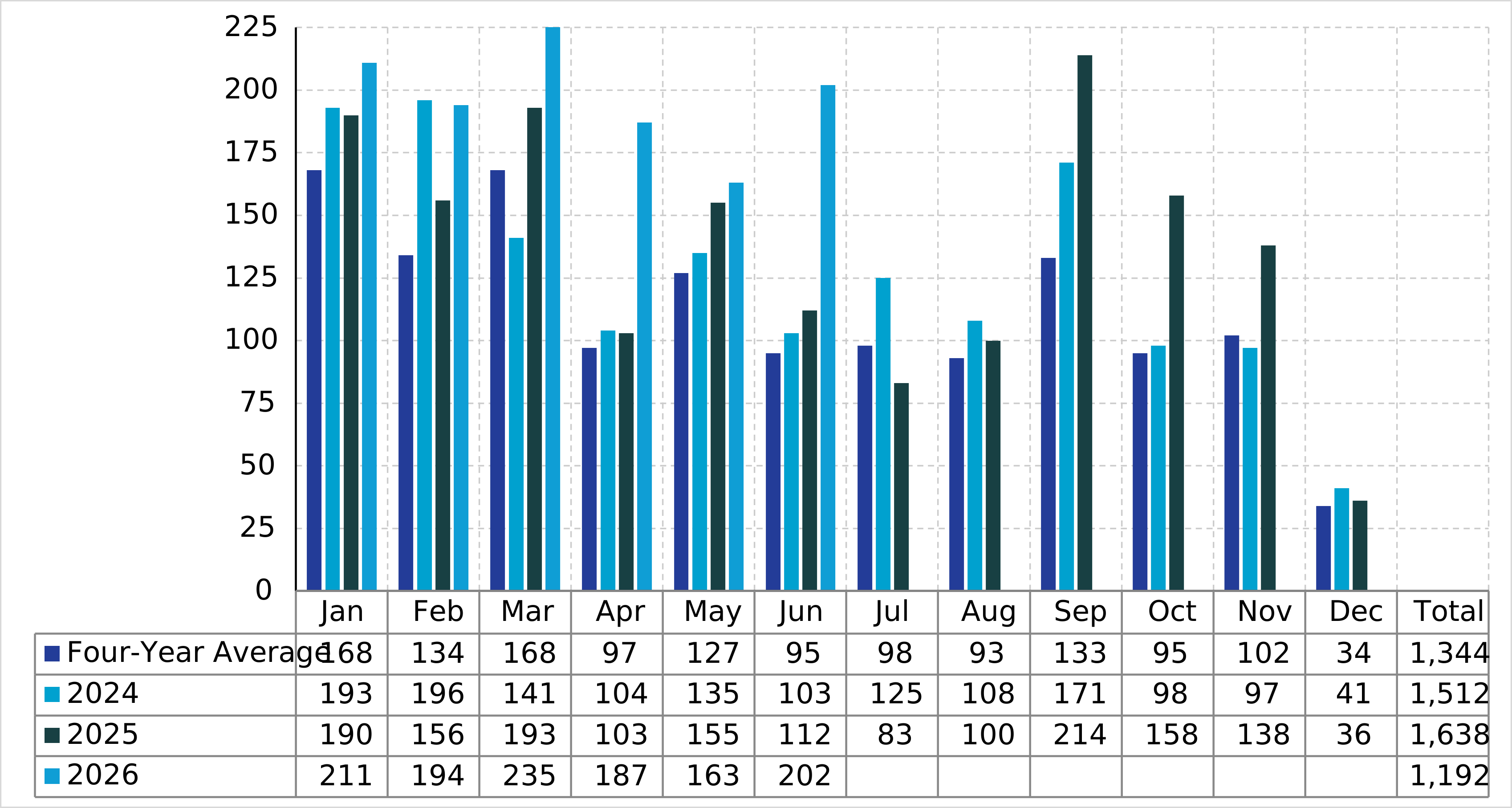
Source: J.P.Morgan, Dealogic; data as of June 30, 2026.
1 Source: US Bureau of Labor Statistics; data as of May 31, 2026.
2 Source: Bloomberg; data as of June 30, 2026.
3 Source: J.P.Morgan, Dealogic; data as of June 30, 2026.
Investment Grade is a bond quality rating of AAA, AA, A or BBB. Yield to Worst (“YTW”) is the lowest potential bond yield received without the issuer defaulting; it assumes the worst-case scenario, or earliest redemption possible under terms of the bond.
Index data source: Bloomberg Index Services Limited. See diamond-hill.com/disclosures for a full copy of the disclaimer.
The views expressed are those of the author as of July 2026 and are subject to change without notice. These opinions are not intended to be a forecast of future events, a guarantee of future results or investment advice. Investing involves risk, including the possible loss of principal. Past performance is not a guarantee of future results.